


The short answer is, yes. Yes it can.
Believe me, I am as surprised as anyone to type that. But it is the truth that I now live, walk and feel in me. Yes, aDBS can functionally cure Parkinson’s disease.
For the past two weeks I have been living my best life, coasting along the French Riviera, taking French classes and spending entire days forgetting that anything was once wrong with me.
And it’s not just me. I got a new French tutor earlier this week. Today in our lesson we discussed a text in which the person involved had some memory problems. That led me to remark that it might be some kind of dementia, to which my teacher told me that she has two parents struggling with dementia and a history of Parkinson’s disease in her family. That led me to say “Devinez quoi, moi aussi j’ai la maladie de Parkinson, mais j’ai peut-être découvert un remède sous la forme d’une nouvelle thérapie appelée stimulation cérébrale profonde adaptative” (“Guess what, I too have Parkinson’s, but I might have stumbled upon a cure in the form of new therapy called adaptive deep brain stimulation.”)
She seemed kinda perplexed that she could not detect any signs of a disease that she thought she knew from someone diagnosed almost 10 years ago that had been sitting right in front of her, 2 hours a day for almost a week. She also made me explain what I meant by the words cure and what is adaptive deep brain stimulation.

(Side note: The speed at which I have been able to pick up this language, evidenced by the fact that I was able to at least somewhat explain all that to her after having taken only two weeks of classes in 25 years, prompted me to write this to my own neurologist, Prof. Alfonso Fasano, just yesterday:
Question, is the Basal Ganglia thought to be involved at all in learning non-motor skills? I ask because I feel as though in just 2 weeks my ability to understand and speak French has skyrocketed, I started out remembering next to nothing from what I had learned in school 25 years ago and now I can get by pretty well here. Feels almost like that limitless pill from this movie…but without some of the raging mania. 😉
Curious if other patients have reported anything similar?)
PS. If there are any such patients out there reading this, please do write about your experience in the comments below.

However, I want to stress that I do not throw the word “cure” around lightly and that I need to be very clear what I mean when I use that word.
For any therapy to be called a cure for a chronic degenerative disease like Parkinson’s, it must be able to rewind the clock and bring the patient back to the state they were prior to the onset of their disease while also halting any future progression. That is also the bar that the neurodegenerative disease community should set for both industry and regulators for many so-called disease modifying therapies in the pipeline. Though for those therapies the turning back the clock timeline needs to be appropriately set for each therapy being tried.
Bear with me now dear reader as I throw some numbers your way. These are what are classically used by movement disorder specialists to define this disease, the UPDRS (Unified Parkinson’s Disease Rating Scale). Mine went from 50+ before my surgery to 20+ after the continuous settings were tuned to 15+ after the adaptive settings were flicked on. (For those who want to better understand that scale and what those numbers mean, click here.)
Though I do wish I could get one of those experts to come test me here as there are a myriad of other factors that have me feeling very good nowadays. The weather has been near perfect for me, I love anytime I can go outside in shorts and t-shirts and be completely comfortable. The food has also been, as the French here say “C’est mourir pour” (“To die for.”) It’s also pretty healthy as many items in supermarkets and restaurants are stamped with an A to E rating for healthiest to least healthy. (Something some parts of the world, cough cough *America* cough cough, could really use) I’m also getting plenty of exercise as I go on long hikes almost every other day and get plenty of sun as I’ve spent a good bit of time out on the water here. I feel like there are times when I’d be down to a 5-10 on that UPDRS out here which would effectively bring me back about 10 years to before my diagnosis.

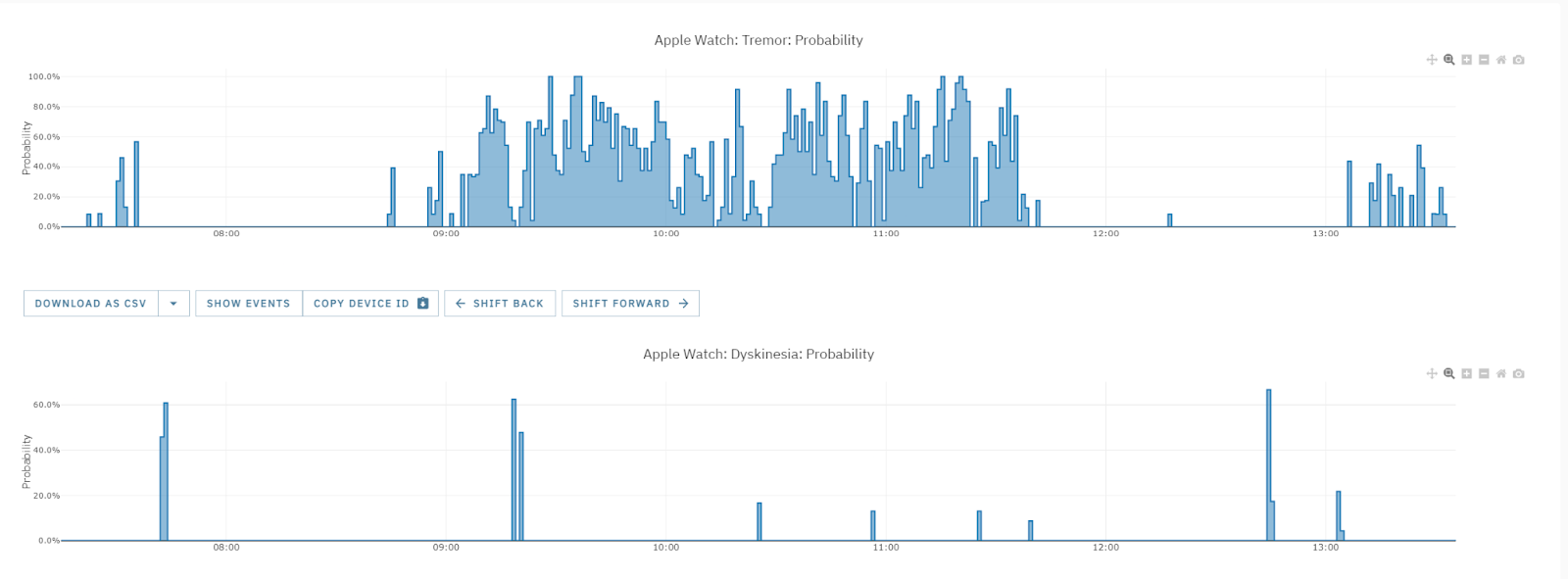
Another way to empirically describe the benefits I feel is through the reduction I have experienced thus far in my medication. Before DBS I was on 6-700mg of Levodopa/day + 2-3mg of pramipexole + 3-400mg of Amantadine. During my peak ONs I would be fairly dyskinetic (an uncontrollable writhing motions) during OFFs I’d be very stiff and have a pretty pronounced tremor. Today all of that has come down to about 75mg of Levodopa per day and I rarely experience dyskinesia anymore.
Subjectively I’d say that my OFF period now seems to be about 90% of a normal person’s and holding steady one year post turning aDBS on.
Now for some caveats. One, no one knows how long these benefits I have experienced will last. We do not have any data on aDBS to go off. Two, I have to stress just how good my pre and post-op care was. I had nearly unfettered access to some of the best doctors and surgeons in the world at the Toronto Western Hospital, something most patients sadly do not get. Three, I had an incredible home environment to come back to where I had two loving retired parents and an extensive family to lean on whenever I needed.

Also, probably the most important caveat for me to mention is that I do not know if I am myself, “cured”. For all my research and all my speculation about the cause of my illness, I still do not know what is wrong with me. We will probably never know what the primary cause of this disease was in any individual except for a few extremely rare genetic cases.
Also, it needs to be very clearly laid out what kind of symptoms DBS can help patients with. If you have a great surgical team that knows where to properly place the electrodes in you then you should expect to see some help in those symptoms associated with motor issues or lack of sleep. If you suffer from non-motor symptoms that are not sleep related then chances are DBS will not be able to help those symptoms.
Oh, and I still do not know if aDBS has done anything to slow down the process that kicked off the neurodegeneration in me. Thankfully, I do now know with pretty good specificity the location of that degeneration in me.


Now, I could show images like the ones above and try to explain what we think we know about the pathways involved, but to be honest, no one knows how relevant any of those general descriptions we have of the brain are to me or to any individual diagnosed. But, I can say that by activating the dorsal part of my STN through DBS my team and I have managed to regain most of my ability to walk and move about the world and, most important of all for me, to sleep peacefully again.
However, there are still a few lingering side effects. Which of these are the disease progressing and which are due to the surgery or the adaptive settings no one knows, though I suspect the latter as many were apparent almost as soon as it was switched on. For example, I can no longer really swim, I find that many such activities that require a good deal of bilateral upper and lower body simultaneous control to be rather difficult now. I also still experience some gait/balance issues, though those I believe I could ameliorate if I finally got my ass to do some physiotherapy and lose more weight. (Hi Mom! 😉
Finally, the technology itself still needs to improve. The whole point of aDBS, as far as I see it, is to act in some capacity like the part of the brain where that electrode gets shoved into and replace the lost/damaged circuitry. We are finally beginning to detect a few of the things going wrong in the brains of those diagnosed, now we need to continue to push the technology so that we can replace those lost functions with even more fidelity than we currently can.


I’ll finish this post with the prescient words of Prof. Alberto Espay who said this to me prior to my surgery…
“You are living proof that there is no “Parkinson’s” but people living with some form of what we call PD for lack of a better name –and everyone is different. I fully agree with Alfonso (Fasano). Yours is a pure nigrostriatal form, unlikely to spread to non-motor regions and, as such, not that critical if we never learn of its biology (which, in turn, is critical to many others with far less benign variants, and the reason we created the CCBP). A confirmation will be that post-DBS life barely reminds you of any symptoms of PD. I do hope you will have some baseline levodopa, though, since that’s important for mood, etc. Take as much time as you need. Learning what will fulfill your sense of purpose best is very important and only you can do that. I shall continue to root for you and look forward to our next time together. Much, much love from Cincinnati! ❤️”
I also just had this exchange with him just a few hours ago…
Me: I have a question that I am wondering if you’d be willing to answer for me?…Based on what you remember about what you saw in me both before DBS (when I was living in Cincinnati, end of 2019/beginning of 2020) and afterwards (at the MDS conference in Madrid last month), how would you describe how much I have improved?
Dr. Espay: You’ve improved a lot. Dyskinesias are gone. I saw none of that. You have gained a little weight but that’s a small price to pay for the stability you have gained. I would qualify DBS for you as a major success.
